

Trump tariffs send shockwaves across global markets

Share
United States President, Donald Trump has announced a new round of tariffs set to take effect on 2 April 2025 that could reshape global trade dynamics, potentially rattling financial markets and raising inflation risks. Aimed at protecting U.S. industries, reducing trade deficits, and securing more favourable trade agreements, these measures could trigger widespread economic consequences. But what exactly should investors expect, and how will markets respond?
Overview of reciprocal tariffs
On 2 April, President Trump announced a set of reciprocal tariffs which include a baseline 10% tariff on all U.S. trade partners, with higher rates for countries deemed to have unfair trade practices.
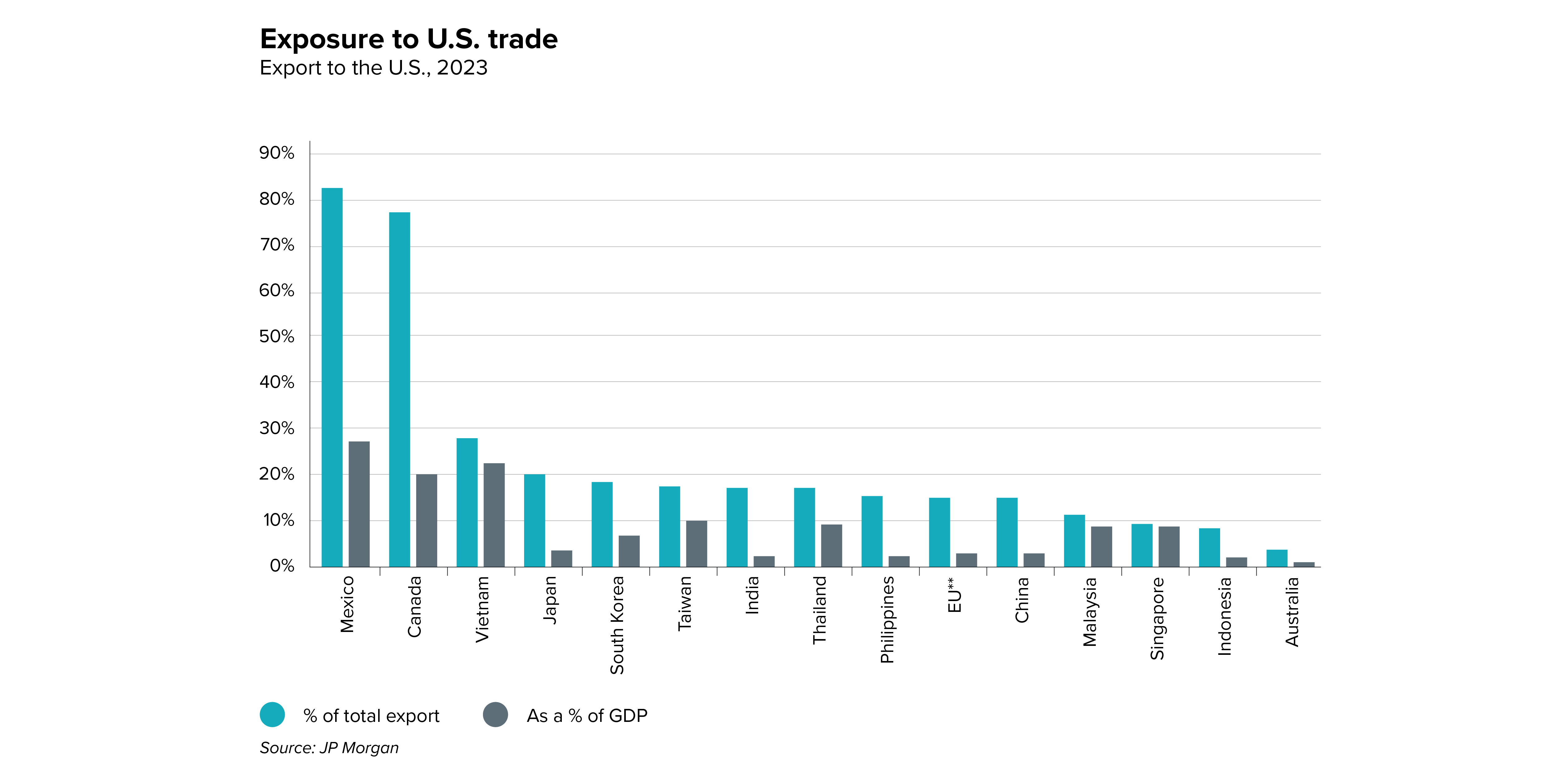
Trump’s tariffs are unlikely to have a large direct impact on New Zealand trade as our trade deficit with the U.S. is small relative to other nations and we have not introduced rhetoric around imposing reciprocal tariffs. However, the U.S. is an important trading partner, overtaking Australia last year to become our second biggest export market behind China, as evidenced below in the graph showing the % of total NZ exports by country. Further, we are a small export reliant nation and economically weak at present after our fight with inflation.
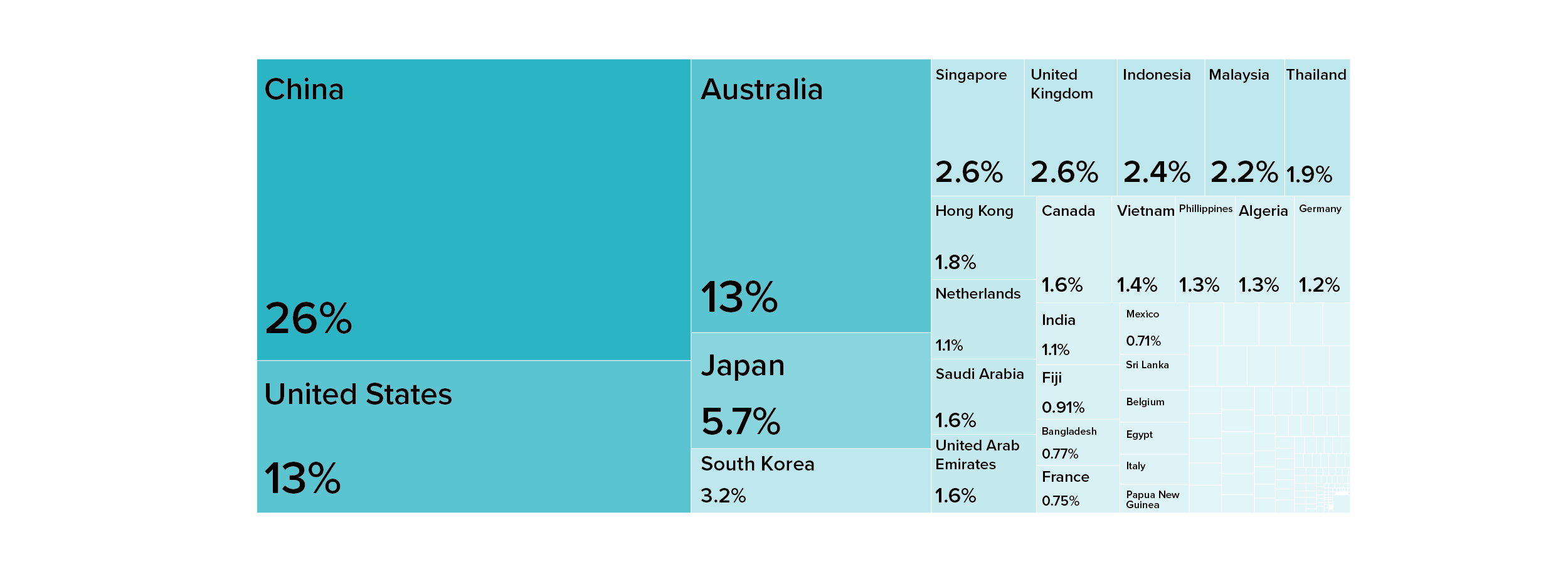
Indirect effects could be significant, especially if U.S.-China trade tensions escalate. If China retaliates by reducing imports from U.S. allies, New Zealand exports like meat and dairy could suffer. While some sectors might benefit from U.S. tariffs on competitors, overall economic uncertainty could lead to market volatility and potential downside risks for New Zealand trade and investment.
Inflation and potential recession risks
Higher tariffs are expected to drive up consumer prices in the U.S. raising concerns about a potential resurgence of inflation, especially in those industries most directly impacted by tariffs. There is also a risk that these cost increases could lead to broader inflation across the U.S. economy, potentially prompting the Federal Reserve to tighten monetary policy by raising interest rates. This comes at a time when U.S. consumer spending and savings levels are already weakening, along with consumer confidence which has fallen to multi-year lows over tariff and cost-of-living concerns.
As consumers find it increasingly difficult to absorb higher prices, their consumption levels will decline and ultimately weigh on economic growth and corporate earnings. Furthermore, high levels of uncertainty surrounding Trump’s tariff program may cause businesses to defer capital expenditure plans, placing further pressure on corporate and economic growth.
Our global economic consultant, BCA Research have reaffirmed their views that a U.S. recession is now likely as economic growth slows due to cuts in fiscal spending and an ongoing trade war with foreign trading partners. In recent weeks, major global investment firms such as Goldman Sachs and JP Morgan have also revised down their U.S. growth estimates and increased their probabilities of a US recession.
What does this mean for Findex portfolios?
Findex continues to take a cautious stance with our investment strategy and portfolio positioning considering ongoing market volatility and the potential risks associated with President Trump’s tariff announcements. Findex portfolios retain an underweight allocation to both domestic and international shares and an overweight allocation to domestic and international fixed interest. We retain a high level of conviction in our current asset allocation and believe that portfolios are well constructed to navigate the current period of market instability.
Learn how our Wealth Management team can help you navigate market uncertainty with confidence
For over a decade, Craig has been providing comprehensive investment and financial advice to clients throughout New Zealand. Since joining Findex in 2017, he has built a strong reputation as a trusted advisor who takes a holistic approach to financial planning.
As the Adviser Representative on the Findex New Zealand Investment Committee, Craig ensures client interests are at the forefront of all decisions. He is committed to creating well-rounded financial strategies that align with each client's financial and lifestyle goals, helping them make the most of their money and achieve long-term success.